Skip to content
All playbooks
Diagnose a recurring problemMedium

Problem Solving: agree the mechanism before choosing actions

Build a shared problem statement, separate evidence from explanation and choose tests for the most credible causes.

Output

Causal hypothesis map with corrective experiments

Time

4 hours

People

6–12

Preparation

3–10 days

Facilitator

Medium

Decision owner

Situational

Output

Causal hypothesis map with corrective experiments
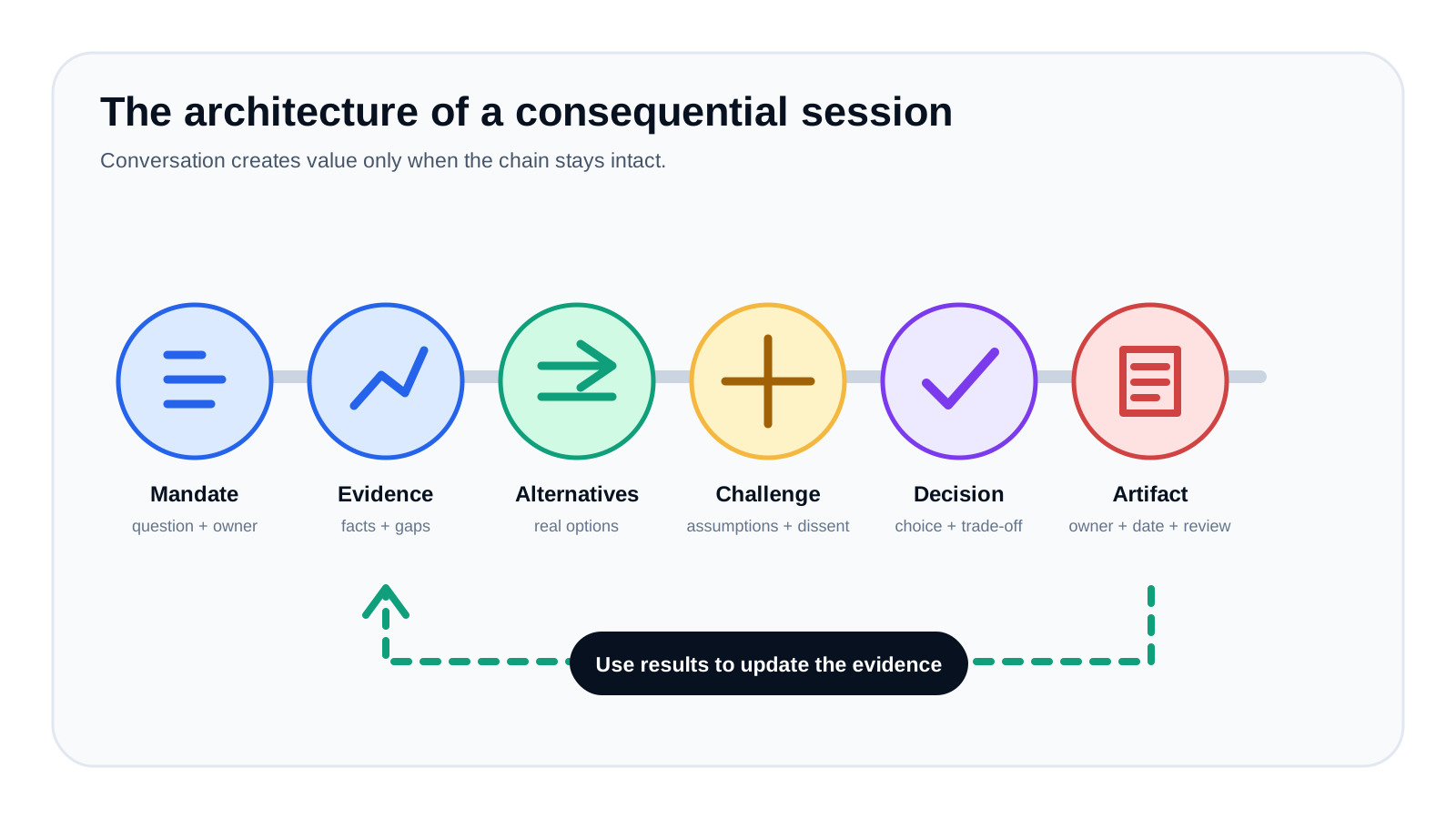
A working-session chain from mandate and evidence to alternatives, challenge, decision and a reviewable artifact.

Use when

  • A measurable problem recurs but functions explain it differently.
  • The group jumps from symptoms to favourite solutions.
  • Evidence can be inspected and corrective tests are possible.

Do not use when

  • An active incident requires command and containment first.
  • The issue is a personal conflict requiring mediation.

Preparation

  • Define expected versus actual performance.
  • Collect time-series, examples and counterexamples.
  • Map the process boundary and affected roles.
  • Separate containment already taken from causal claims.

Roles

Problem owner

Defines the outcome and owns the corrective cycle.

Process experts

Bring direct evidence from the work.

Facilitator

Separates observation, inference, cause and action.

Evidence recorder

Marks confidence and missing data visibly.

Run of show

1

30 min

Problem frame

Agree the observable gap, boundary and consequence.

Output: Problem statement
2

60 min

Evidence gallery

Inspect facts, exceptions and missing data.

Output: Evidence register
3

75 min

Causal hypotheses

Build mechanisms that could explain the pattern.

Output: Hypothesis map
4

45 min

Challenge and tests

Seek disconfirming evidence and practical tests.

Output: Prioritised tests
5

30 min

Corrective cycle

Assign owners, measures and review dates.

Output: Experiment cards

Design note

A plausible story is not yet a cause. The session should increase the quality of the next test, not merely the number of actions.

Exercises

Artifacts

  • Problem statement
  • Evidence register
  • Causal hypothesis map
  • Experiment cards
  • Review calendar

Follow-up

  • Run the smallest discriminating test before a broad rollout.
  • Review evidence and mechanism separately from task completion.
  • Retire explanations that fail their stated test.

Failure modes

  • A cause is declared because it sounds plausible.
  • The group produces a fishbone but no test.
  • Corrective actions are judged by completion rather than outcome.

Remote and hybrid

Collect evidence asynchronously, use one shared causal map and time-box verbal advocacy after silent hypothesis work.

Accessibility

  • Use plain-language evidence cards and define technical terms.
  • Allow asynchronous evidence contribution.
  • Provide a textual alternative to causal diagrams.