Skip to content
All playbooks
Set up a new teamMedium

Team Charter: make a new team's operating contract real

Define purpose, boundaries, roles, decision rights, working agreements and the first review cycle for a new or reset team.

Output

Team charter with decision rights and review date

Time

4 hours

People

6–12

Preparation

3–7 days

Facilitator

Medium

Decision owner

Required

Output

Team charter with decision rights and review date
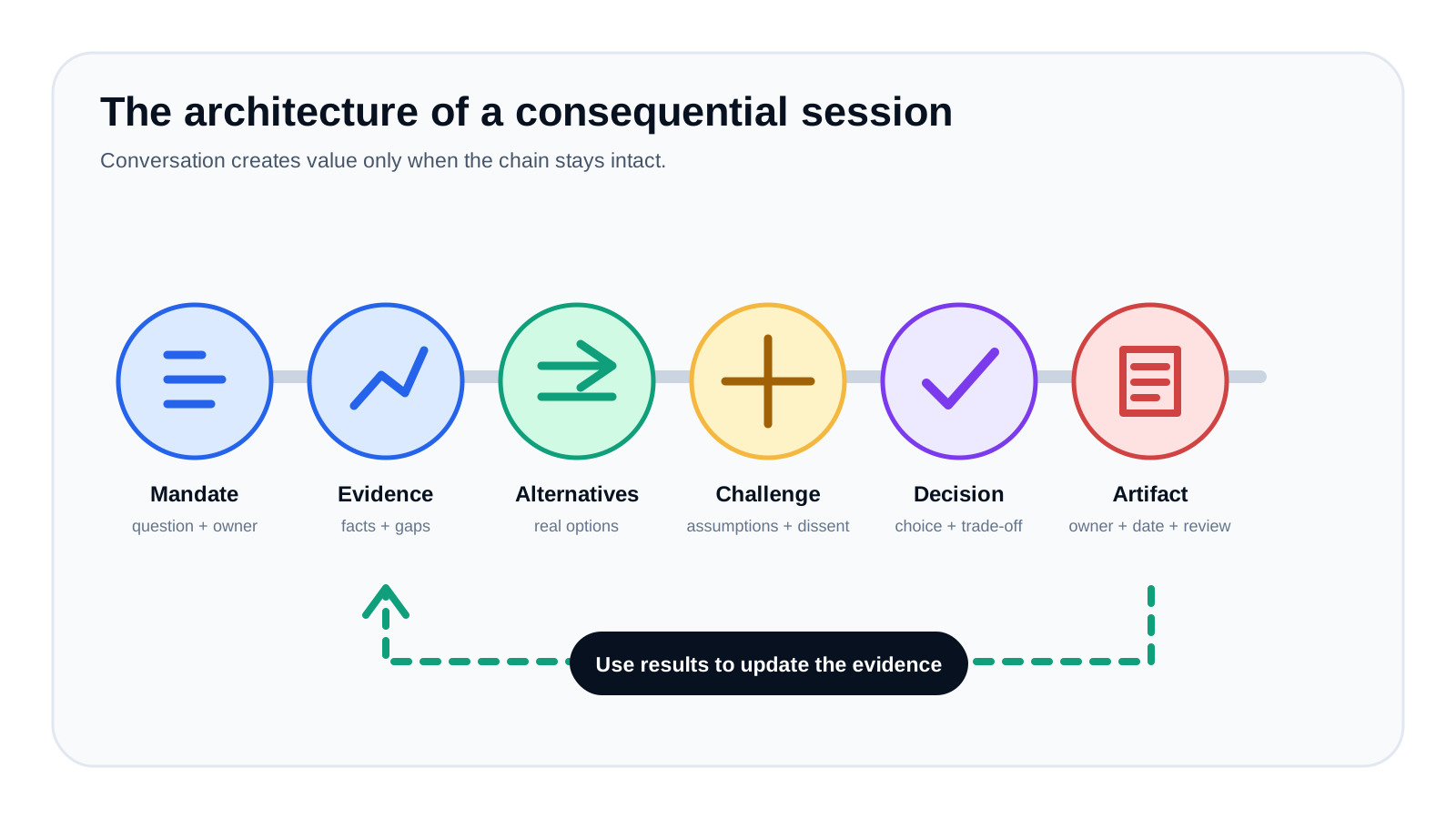
A working-session chain from mandate and evidence to alternatives, challenge, decision and a reviewable artifact.

Use when

  • A new leadership or cross-functional team must start operating quickly.
  • Roles are clear on the organisation chart but ambiguous in recurring work.
  • The team can test and revise agreements over the next 30 days.

Do not use when

  • The team already has clear agreements and the actual problem is workload or strategy.
  • The leader will not change any decision or meeting behaviour.

Preparation

  • Collect each member's top outcomes, dependencies and recurring decisions.
  • List non-negotiable organisational constraints.
  • Bring two realistic scenarios that expose role ambiguity.

Roles

Team leader

Defines non-negotiable purpose and participates without monopolising the design.

Team members

Make commitments tied to recurring work.

Facilitator

Turns values language into observable agreements and scenarios.

Run of show

1

35 min

Purpose and boundary

Clarify why the team exists and what sits outside it.

Output: Purpose and scope
2

45 min

Outcomes and dependencies

Connect individual roles to shared results.

Output: Outcome and dependency map
3

60 min

Decision rights

Assign recurring decisions and participation modes.

Output: Decision-rights table
4

55 min

Working agreements

Define observable meeting, handoff and dissent rules.

Output: Draft charter
5

45 min

Stress test and review

Test the charter under pressure and schedule revision.

Output: Charter v1 and 30-day review

Design note

A charter is a versioned operating contract. It becomes useful only when it changes what the team does in a real decision, handoff or disagreement.

Exercises

Artifacts

  • Purpose statement
  • Role boundaries
  • Decision-rights table
  • Team charter
  • 30-day review

Follow-up

  • Use the charter in the next real decision, not only as a document.
  • Collect exceptions for 30 days.
  • Revise agreements using evidence at the first review.

Failure modes

  • The charter contains values with no observable behaviour.
  • Every decision is assigned to the whole team.
  • The document has no owner or review date.

Remote and hybrid

Draft agreements asynchronously, then use live time for decision scenarios and explicit commitments.

Accessibility

  • Avoid forced personal disclosure.
  • Offer written contribution for every agreement.
  • Publish an accessible text version rather than a board image only.