Skip to content
All playbooks
Learn from experienceLow

After Action Review: change the next attempt

Compare expected and actual results, explain the mechanism and commit to concrete changes in the next work cycle.

Output

AAR record with retained practice, changed rule and next test

Time

90 minutes

People

5–12

Preparation

1–3 days

Facilitator

Medium

Decision owner

Situational

Output

AAR record with retained practice, changed rule and next test
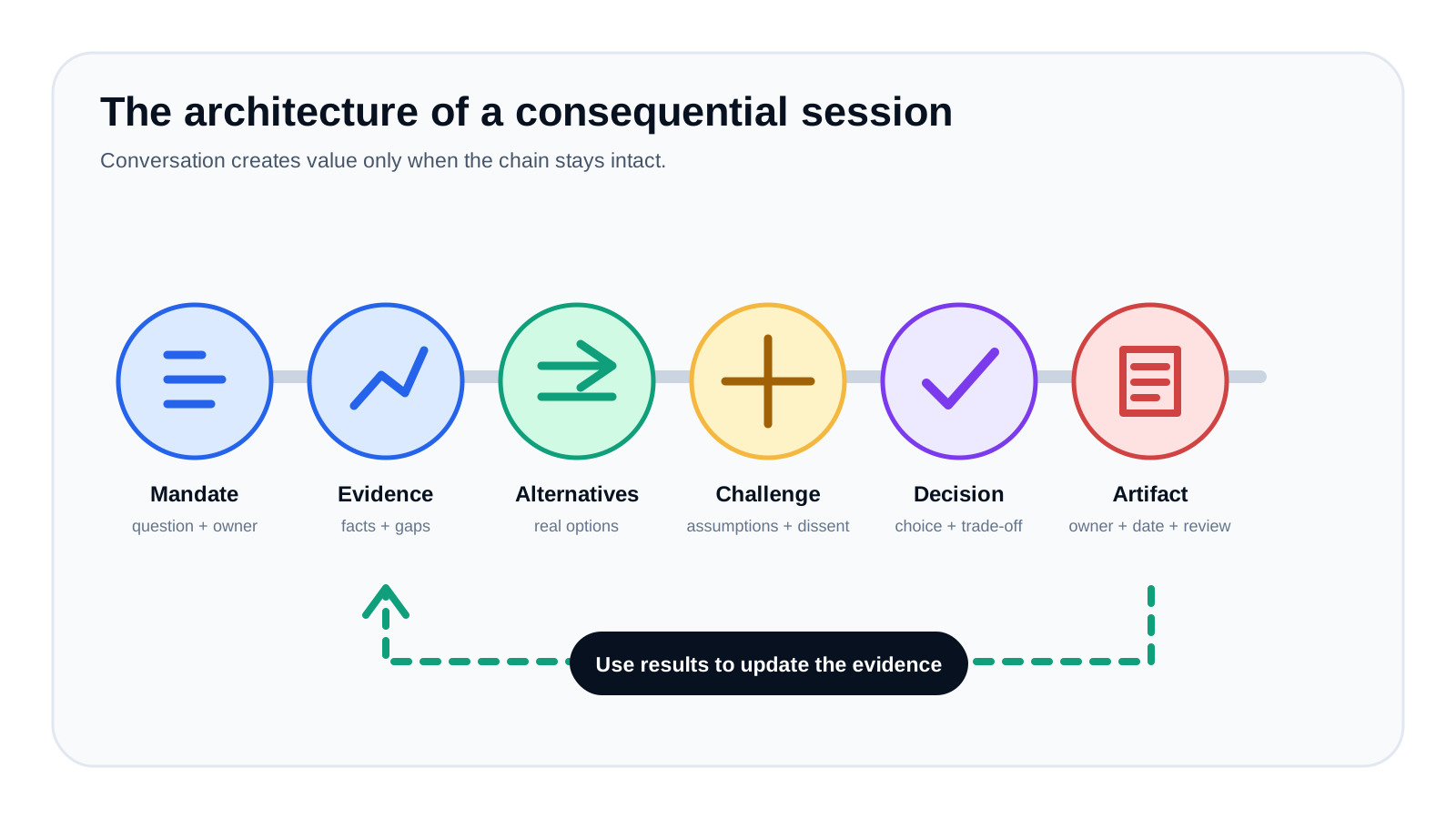
A working-session chain from mandate and evidence to alternatives, challenge, decision and a reviewable artifact.

Use when

  • A project, incident, launch or recurring cycle has produced observable results.
  • The group needs to retain useful practice and change specific rules.
  • Owners can test the changes in a next attempt.

Do not use when

  • An active incident still requires containment.
  • The meeting is intended to assign personal blame or determine disciplinary action.

Preparation

  • Collect the expected outcome, plan and actual result.
  • Bring a short timeline and material evidence.
  • Separate incident investigation or personnel processes from the learning review.

Roles

Work owner

Defines the reviewed cycle and owns the next attempt.

Facilitator

Keeps the review evidence-based, specific and non-punitive.

Participants

Contribute direct observations and make bounded commitments.

Run of show

1

10 min

Expected

Reconstruct the intended outcome and plan.

Output: Expected state
2

15 min

Actual

Build one evidence-based account of what occurred.

Output: Actual state and timeline
3

25 min

Mechanism

Explain why the difference occurred without stopping at blame.

Output: Mechanism hypotheses
4

25 min

Retain and change

Choose practices to keep and rules to alter.

Output: Change list
5

15 min

Next test

Assign owner, evidence and review point.

Output: Next-cycle experiment

Design note

The output is not a list of lessons. It is an explicit change to the next attempt, with an owner and evidence that can show whether the change helped.

Exercises

Artifacts

  • Expected-versus-actual record
  • Mechanism notes
  • Retain/change list
  • Next test
  • Owner and review date

Follow-up

  • Publish changes before the next cycle begins.
  • Check whether the new rule was actually used.
  • Review outcome evidence after the next attempt.

Failure modes

  • The review becomes a chronology without mechanism.
  • Lessons are abstract nouns rather than changed rules.
  • The group identifies actions but no next test or owner.

Remote and hybrid

Build the timeline asynchronously, then use live time for mechanism, change decisions and ownership.

Accessibility

  • Share the timeline in advance.
  • Allow written observations before discussion.
  • Use neutral language and a clear route for raising safety concerns outside the session.