
An overdue invoice is not a single type of work. The customer may have paid while the bank feed is delayed, disputed a line item, asked for a corrected invoice, or simply missed the due date. A system that drafts the same reminder for every overdue balance can make collection faster while making resolution slower.
Reconcile before contacting the customer
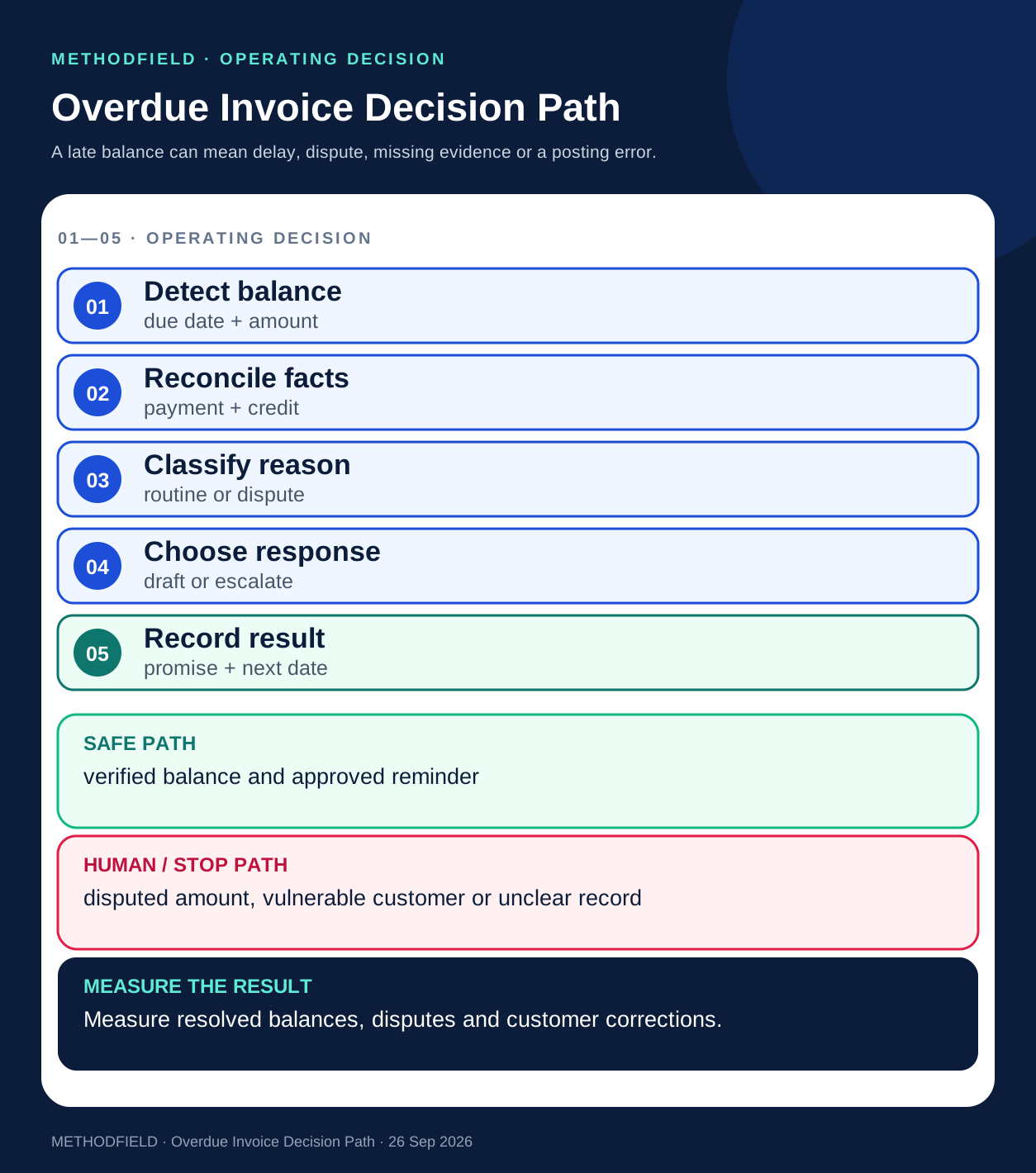
The starting record is an invoice ID, customer ID, due date, amount, currency, payment terms and current status. Before a message is prepared, the workflow should check received payments, credit notes, promised payment dates, open disputes and recent contact. These checks belong in accounting or payment systems and deterministic rules. AI may summarise the evidence; it should not become the authority on whether money is owed.
Define a small reason taxonomy: routine delay, payment in transit, missing purchase-order reference, disputed amount, incorrect customer details and hardship or sensitive circumstance. The taxonomy makes routing and measurement possible. It also exposes cases for which an automated reminder would be inappropriate.
Match the action to the reason
For a verified routine delay, AI can prepare a respectful reminder that cites the correct invoice and approved payment route. A person or approved policy controls tone, timing and any offer of terms. A dispute should go to an owner who can review the invoice, agreement and supporting delivery record. A possible accounting error should pause collection while the record is corrected. The message should never claim that a customer has ignored earlier contact unless the system can verify it.
Consider a small design agency whose invoice appears overdue. The customer replies that a purchase-order number is missing. A weak automation sends another payment reminder next week. A controlled workflow classifies the response, assigns a finance owner, issues the corrected document if authorised and records the new due-date decision. The example demonstrates routing rather than a claim of improved cash flow.
Make the queue visible
Record for each case: reason, owner, next action, promised date, evidence, last contact and resolution status. Keep customer-facing messages linked to the original invoice and the approved financial record. A closed case needs a verifiable event, such as payment matched, credit issued or dispute resolved, rather than a model-generated “done” label.
Measure days overdue by reason, time to resolve disputes, wrongly sent reminders, customer corrections, staff review time and balances actually reconciled. The number of reminders sent is an activity measure; it can rise when the process becomes worse.
A bounded first test
Take a sanitised group of recent overdue items and classify them manually. Compare AI suggestions with the finance owner's reasons and next actions. Start with draft-only reminders for a narrow routine-delay class. Keep disputes, large amounts, changed bank details and unclear records outside automatic sending. Test what happens when a payment arrives after a draft but before the send.
The existing Methodfield AI bookkeeper article focuses on intake and payment of supplier invoices. This article concerns money owed by customers and the communication needed to resolve it. The same audit principle applies: every material action should be traceable to an authorised record.
Working artifact: the receivables case log
The log should make a late balance actionable without turning an uncertain record into an accusatory message.
| Field | Evidence or owner |
|---|---|
| Balance | Invoice ID, amount, currency, due date and latest ledger state |
| Reconciliation | Payments in transit, credit notes, disputes and recent replies checked |
| Reason | Routine delay, document defect, dispute, hardship or unknown |
| Action | Approved reminder, correction request or named finance handoff |
| Closure | Matched payment, authorised credit or documented dispute resolution |
Recheck the balance immediately before an external send. A draft that was correct yesterday can be wrong after a payment posts. Preserve the source and time of the last check so a reviewer can explain why the message went out.
Sources and scope
- Methodfield: The AI Bookkeeper Needs an Audit Trail.
- Methodfield: Who Owns an AI System After Launch?.
Local finance, consumer and collections requirements must be reviewed for the actual market and business. No legal or cash-flow outcome is implied by the illustrative agency example.