
A customer asks for a time through a form, messaging app or phone call. The team answers quickly, yet the booking still fails: a slot was offered but never held, a reschedule changed the calendar but not the reminder, or two employees promised the same time. The useful unit of automation is the confirmed appointment, not the speed of the first reply.
Start with the state of the booking
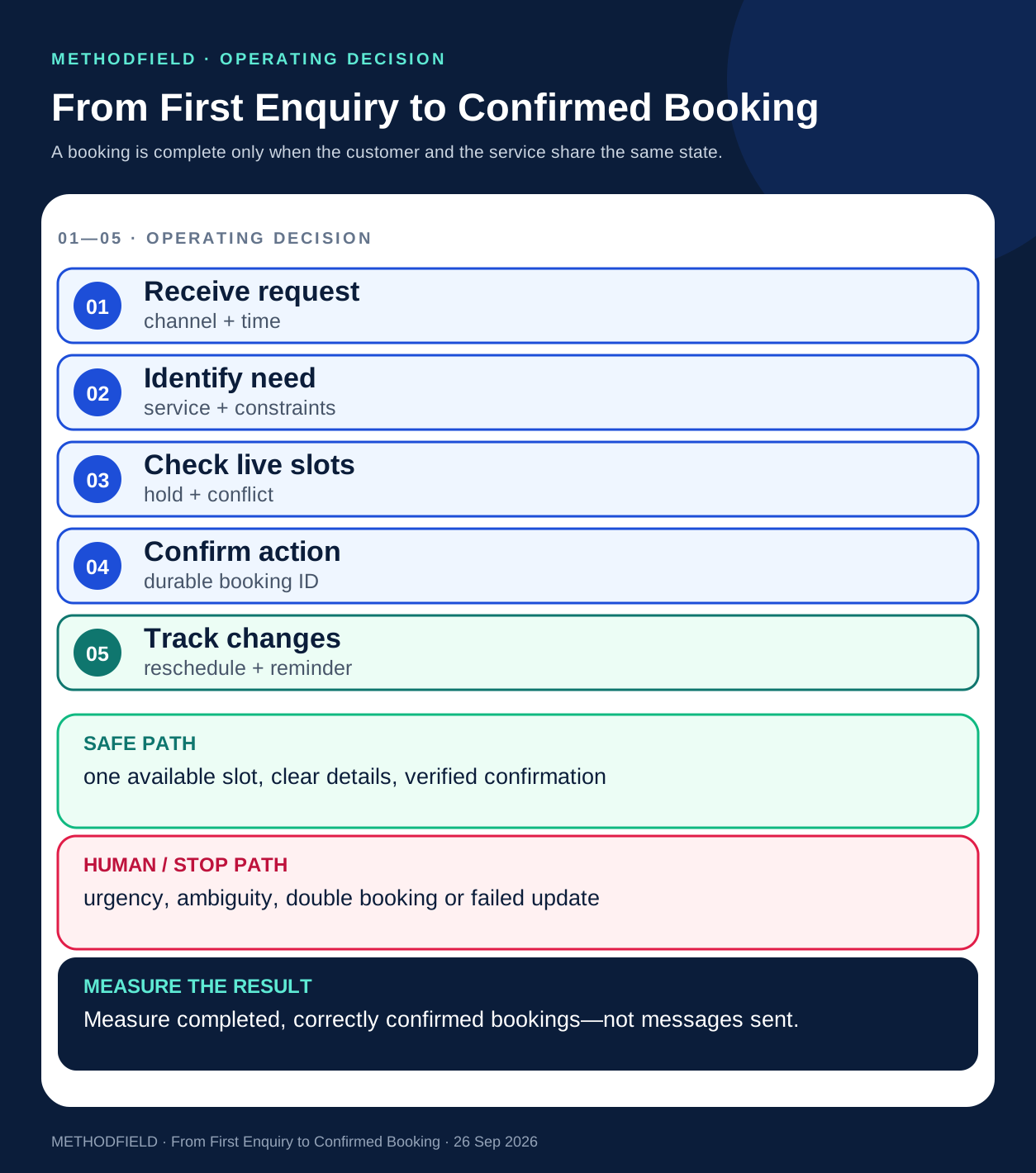
Map one service from initial enquiry to arrival. Name the system of record for availability and the person who can resolve an exception. A request, a proposed slot, a temporary hold and a confirmed appointment are different states. If software treats them as one, it will tell customers that they are booked when the business has only suggested a time.
The state record should carry a stable booking ID, service, location or channel, timezone, customer contact, status, owner, confirmation timestamp and the active reminder version. A reschedule should supersede the earlier slot and cancel or replace its reminder. A cancellation should release capacity only after the booking system confirms the change.
Where AI helps
AI can interpret a free-text request, identify the service and preferred time, detect missing details and prepare a clear reply. The booking system should check opening hours, staff capacity, buffers, eligibility and conflicts with ordinary rules. A model should not invent availability from a website paragraph or claim that a reservation succeeded before the calendar returns a durable ID.
For a standard request, the system can propose available slots and prepare confirmation. For urgent, ambiguous or sensitive requests, an employee should choose the next action. The handoff must include the original message, extracted constraints, slots already offered and the current booking state. The customer should not need to repeat the story.
A small worked example
Suppose a repair studio receives: “Can I come Friday afternoon for a screen repair?” The assistant may classify the service and ask for the device model. It should not promise “Friday at 15:00” until the required duration, parts and technician availability are known. Once the customer chooses a valid slot, the calendar creates a booking ID and the confirmation repeats the date, timezone, place and cancellation path. If the calendar update fails, the message remains a draft and an owner receives the case.
Run a controlled test
Use a recent, sanitised sample of requests: straightforward bookings, incomplete requests, conflicting slots, reschedules, cancellations and failed calendar calls. Record the current baseline before changing the process. During the first trial, let AI prepare structured requests and replies while a person performs the final action. Compare the calendar record with the customer-facing confirmation for every case. Enable automatic confirmation only for a narrow class with reliable identity, live availability and a tested recovery path.
Measure completed correctly confirmed bookings, time from request to confirmation, duplicate bookings, no-shows, customer corrections and staff minutes spent on exceptions. A higher reply count is not evidence of a better booking service.
Decision card
Before launch, the owner should be able to answer: What event creates the booking? Which system returns its ID? How is an old reminder invalidated after rescheduling? Who handles a failed write? What can the customer see and change? If any answer is missing, keep the action under employee approval.
This article applies Methodfield's workflow-priority approach to one concrete service. The related multilingual service model covers language and channel routing; the booking state must still be controlled by the calendar or service system.
Working artifact: a booking transaction record
Keep one row per request. It should let an employee reconstruct what the customer was told and what the booking system actually did.
| Field | Evidence to retain |
|---|---|
| Request | Channel, original wording, received time and requested service |
| Proposed slot | Live availability response, duration, location and expiry of any hold |
| Commitment | Customer choice, approved action, booking ID and confirmation timestamp |
| Change | Previous and new booking versions, cancelled reminder and replacement message |
| Exception | Failed write or conflict, current customer-visible state, owner and next contact time |
The critical check is equality between the confirmed calendar state and the message the customer receives. If they differ, show an unresolved state and assign a person; do not send a second confident confirmation.
Sources and scope
- Methodfield: Prioritise the Workflow Before You Choose the AI.
- Methodfield: The Multilingual AI Service Desk.
The repair-studio example and proposed decision card are illustrative Methodfield operating patterns, not a reported client result.