Published system analysis
Mission of Gravity
Hal Clement
Spoiler-free analysis is open
This original material examines the management system without reproducing the text or retelling the plot. Source-backed premise and editorial interpretation are labelled separately.
Source-backed premise
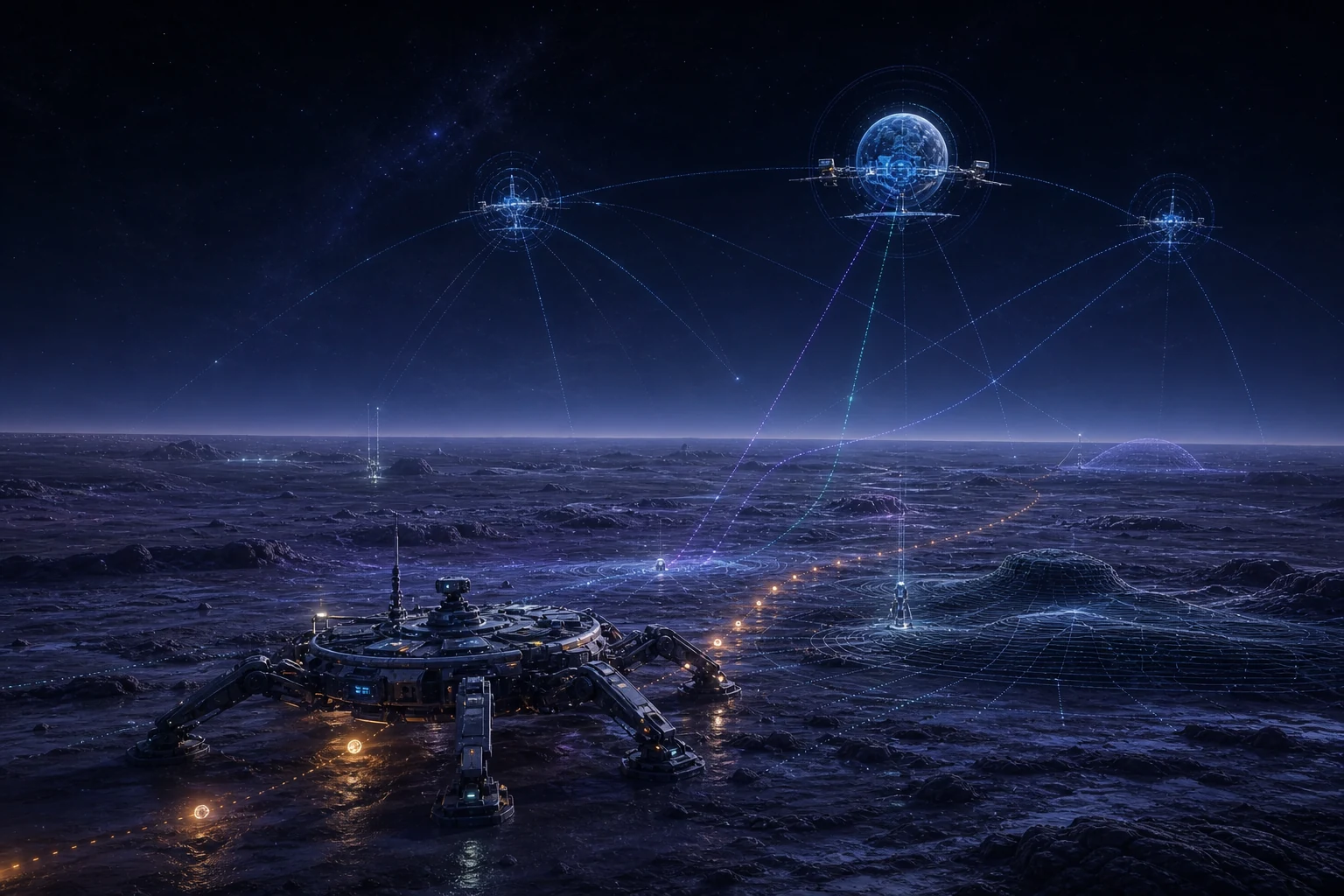
The publisher describes Mesklin as an extreme high-gravity world that human explorers cannot safely traverse. A crashed probe must be recovered, so Captain Barlennan and his Mesklinite crew undertake the journey with human support. This analysis uses only that public mission premise.
Editorial management thesis
A partnership across radically different operating environments works when authority follows situated knowledge, the exchange of value is explicit and neither side mistakes technical dependence for the right to control the other.
New method studies
The same fictional system can answer a different management question when examined with another tool.
SIPOC
Mission of Gravity and SIPOC: Define the Boundary Before the Mission
Cooperation fails when partners assume they share the same process boundary.
Read the studySystem map
Authority
The human team defines the recovery objective and supplies remote scientific support; Barlennan’s crew holds operational authority on terrain the humans cannot enter.
Information
Orbital models offer scale and prediction, while Mesklinite experience reveals what movement, weather and danger mean locally. Neither information system is sufficient alone.
Resources
The partners contribute non-substitutable resources: technology, scientific models and communications on one side; mobility, embodied knowledge and field execution on the other.
Incentives
Both parties want the mission to succeed but value different outcomes. Cooperation remains stable only while the exchange is credible and new knowledge does not silently change the bargain.
Adaptation
Plans must be revised where modelled conditions meet field reality. The strongest response combines remote analysis with local experimentation instead of forcing either into the other’s operating assumptions.
Failure modes
- Remote planners treat a scientifically accurate model as a complete operating procedure.
- Local expertise is used for execution but excluded from decisions about objectives, risk and reward.
- Each side withholds its real objective, so successful coordination in the field creates a strategic trust failure later.
Ethical assessment
Environmental dependence can conceal a power imbalance in either direction. Ethical cooperation requires informed consent, a fair share of the value created, the right to challenge mission assumptions and protection from being treated merely as a means of access.
Practical transfer
Map asymmetry
List what each partner can observe, decide and physically do that the other cannot reproduce.
Contract for learning
Define how new evidence changes authority, risk limits, rewards and the right to stop the mission.
Delegate locally
Place time-critical decisions with the party closest to the environment, supported by explicit global safety boundaries.
Limits of the analogy
- Mesklin’s physics creates an unusually clean division of capability; real partnerships often have overlapping skills and more contestable boundaries.
- The novel foregrounds competent problem-solving and gives less attention to the institutional history, law and representation that shape real cross-cultural operations.
Questions for discussion
- 1.Which partner in your system executes the work but lacks authority to revise the plan when local conditions change?
- 2.What knowledge would be lost if the remote model or the field team disappeared?
- 3.How should the exchange of value change when one side learns something that alters the original bargain?
Explore the mechanism
From observation to diagnosis and decision
Rate this material
Evaluate the usefulness of the system analysis, not the literary quality of the book.
—
No ratings yet
Source and editorial record
Mission of Gravity — Hal Clement
Publisher record and premise — GatewayLast reviewed: 2026-08-17
Title and author identify the work under review. No cover art, quotations or publisher description is reproduced.