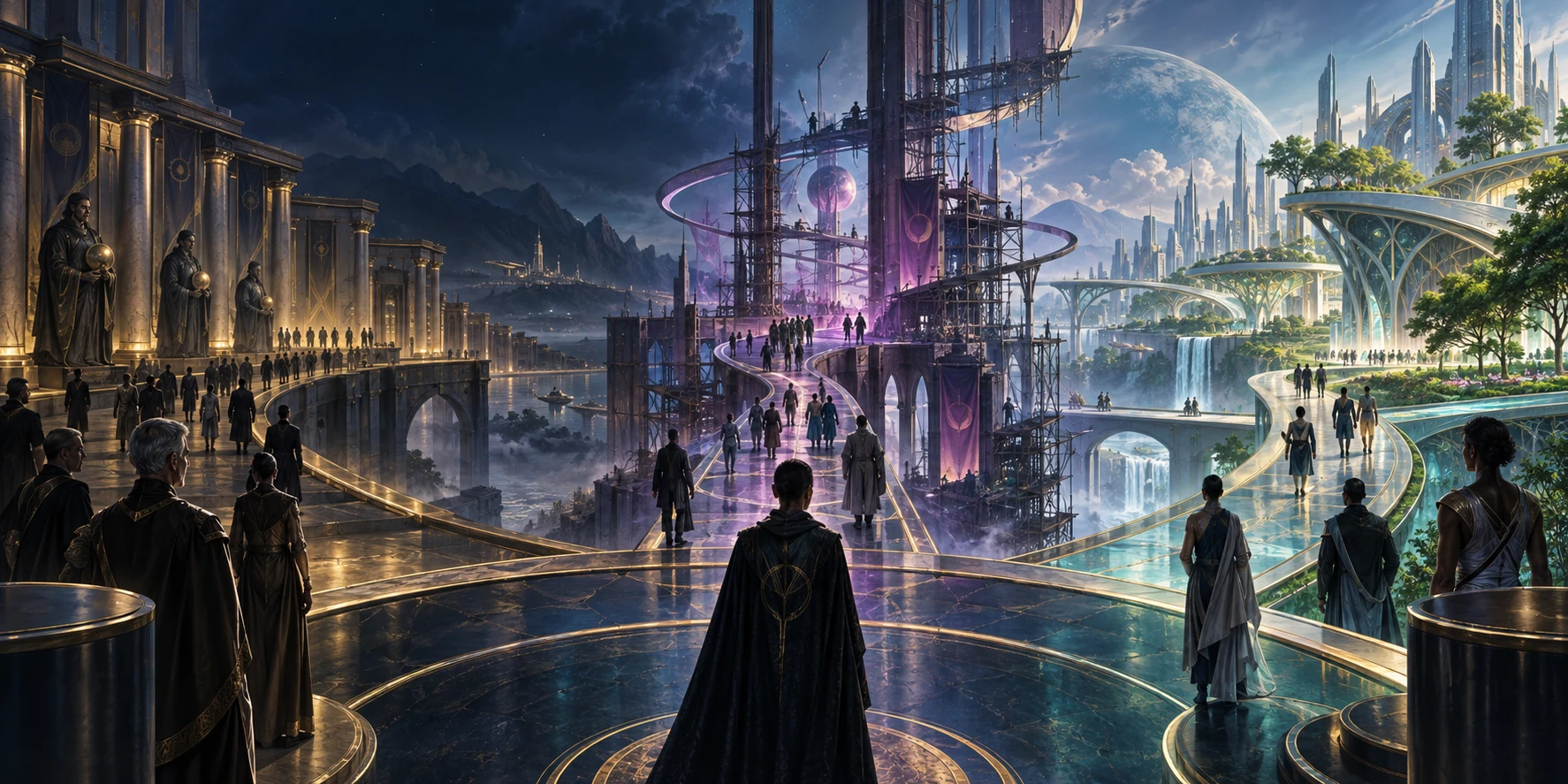
This independent method study examines The Player of Games through Three Horizons. It is an interpretation of the publisher's premise, not a claim that the fictional characters used this management method.
Verified premise
A master player from the Culture enters a game central to the hierarchy and power of another society.
Management thesis
The contrast between a game-centered empire and another social order provides a lens for asking which current practices reproduce a system and which carry a different future.
System map
- Authority: A game's rules reproduce one society's political authority.
- Information: Each society sees the other's order through its own assumptions.
- Resources: Status, institutions and technological capacity support different futures.
- Incentives: Winning within current rules can reinforce the system a reformer hopes to change.
- Adaptation: Three Horizons distinguishes repairing the current order from developing a different one.
Apply the method
- Describe what the present system achieves and where it fails.
- Describe a preferred future with explicit values and trade-offs.
- Identify weak signals and present-day experiments.
Failure mode
Treating Horizon 3 as inevitable or labeling every shiny pilot transformative.
Ethical cost
A useful analogy must still identify whose voice, rights or exposure to harm the method could hide.
Limits of the analogy
The Culture's fictional capabilities and the empire's symbolic game are not a forecast for real institutions.
Discussion question
Which assumption in this fictional system would you test before using the method in your own organisation?