
An AI-generated meeting summary can be accurate and still damage the business if it lands in the wrong CRM account. A caller may use a personal email, a form may carry a trading name, and the transcript may mention several companies. The post-call workflow must resolve which record may be changed before it asks what to write.
Treat identity as a separate decision
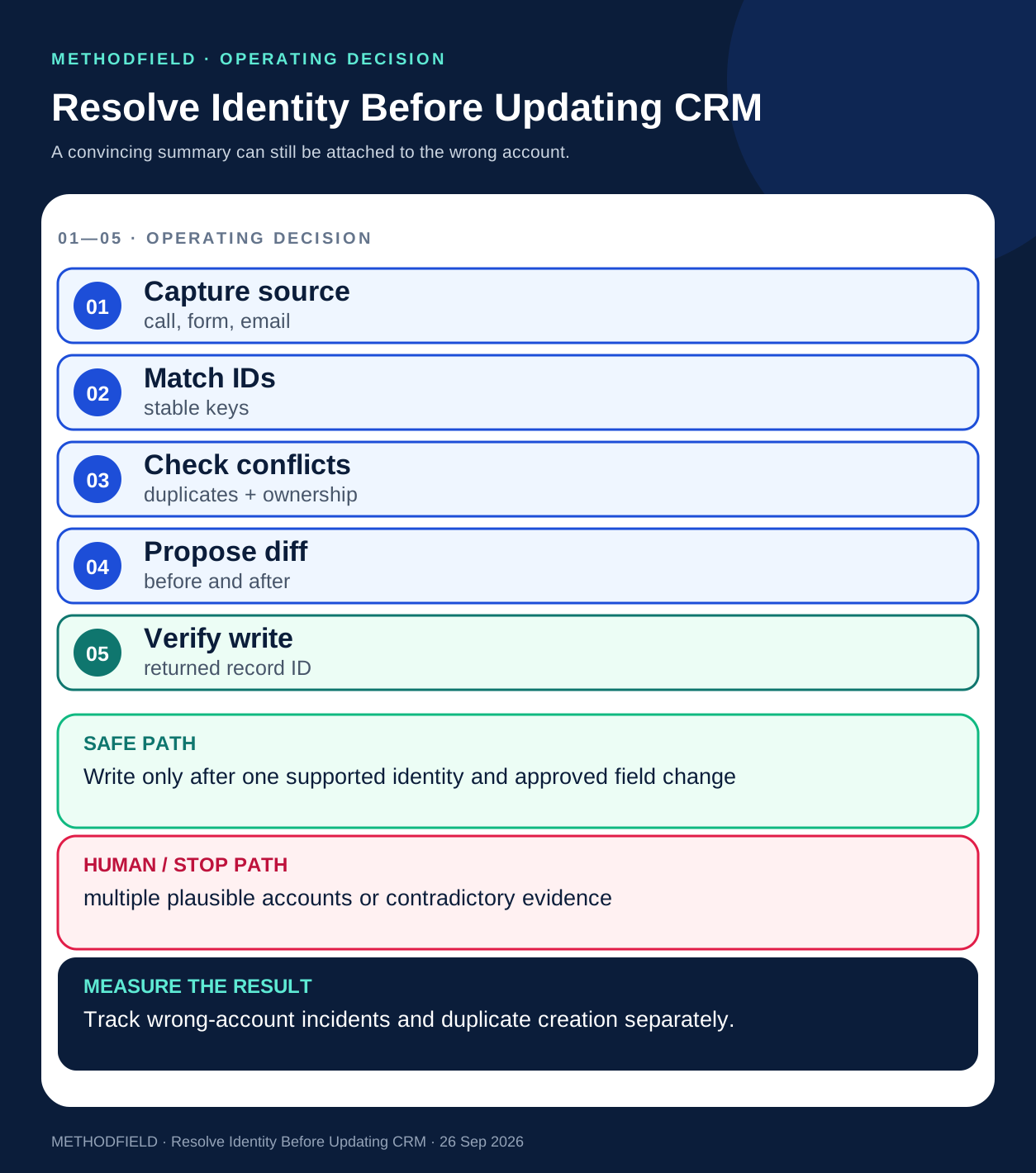
Preserve the source of each clue: authenticated account ID, email address, phone number, meeting invitation, deal ID and statements in the conversation. Stable IDs and verified ownership are stronger than a name similarity score. The system should produce candidate records with the evidence for each match, not silently choose the first result.
Make three states explicit: one supported match, several plausible matches, and no supported match. Only the first can proceed to a proposed update. The second needs a human choice; the third should create an unresolved intake item rather than a fabricated account. A model can help interpret free text, but deterministic rules should enforce account scope and write permissions.
Review the proposed change, field by field
After identity is resolved, show the current CRM value, proposed value, source passage and reason for the change. “Budget approved” needs a cited statement; a meeting attendee's speculation should not become a fact in the account record. If a date is ambiguous, leave the field unchanged and ask for clarification. Approval can be selective: accept a task, edit a summary and reject a stage change.
Then execute through the normal CRM API. Read back the returned record ID and field state. If the call times out, query the transaction before retrying so one meeting does not create two tasks or overwrite a later employee update.
Worked failure mode
A sales representative speaks with Maya from Northstar Labs. The CRM has Northstar Labs Ltd and Northstar Lab Services, each with a Maya. The transcript alone cannot resolve the legal account. A weak agent chooses the closest name and writes a new opportunity stage. A controlled workflow displays both records, meeting metadata and account owners to the representative. No write occurs until the identity is confirmed. The example illustrates a failure mode, not an incident report.
Measure data harm
Track wrong-account updates, duplicate contacts, duplicate tasks, rejected identity proposals, field corrections and time spent resolving ambiguity. Sample the records that passed without human review; silent errors matter more than visible abstentions. When repeated ambiguity comes from the same form or meeting process, repair that source rather than expanding the prompt.
Start in shadow mode on recent sanitised meetings. Compare the system's candidate identity and proposed field changes with the representative's verified outcome. Enable writes only for the narrow fields and accounts that pass both identity and evidence checks.
This article continues Methodfield's sales automation pattern. That article describes the complete post-call process; this one isolates the identity and record-integrity gate before any CRM write. Its checks also fit Methodfield's AI evaluation plan.
Working artifact: a CRM change proposal
Show one proposed write as a reviewable bundle before the system receives write authority.
| Field | Review evidence |
|---|---|
| Identity | Candidate account IDs, matching clues and unresolved conflicts |
| Change | Field name, old value, proposed value and source passage |
| Permission | Actor, allowed field, account scope and approval decision |
| Execution | Request ID, CRM response, final record ID and value read back |
| Recovery | Retry check, duplicate risk and person who can reverse the write |
The reviewer should be able to reject one field without losing a useful summary or task. If the source record changed since the proposal was prepared, refresh the diff before approval; an old value can make a once-correct write destructive.
Sources and scope
Use sanitised examples and the target CRM's actual identity, permission and audit capabilities when implementing this pattern.