
Traditional search gives a shopper a list of pages. An AI answer engine can compress the research: it compares constraints, explains trade-offs and recommends a short list before the customer reaches a store.
That changes the first page a merchant must win.
Shopify's Q1 2026 commerce data says referrals from AI chatbots grew more than eight times year over year, while AI-attributed orders grew nearly thirteen times. For sessions that began on a product-detail page, AI-referred visitors reportedly converted about 49% better than visitors from organic search, and AI-attributed orders carried 14% higher average order values.
The same source makes an equally important point: organic search still sends far more sessions. AI discovery is an emerging channel, not a replacement for SEO.
Read the numbers without the hype
The Shopify dataset is global platform data, not a Europe-only sample. It also measures identifiable referrals. AI-assisted discovery inside search features may still appear as organic traffic, while no-click recommendations can be invisible to conventional analytics.
Three conclusions are reasonable:
- AI referrals are growing quickly from a relatively small base.
- Visitors arriving after an AI-assisted comparison may have stronger purchase intent.
- A merchant should measure the channel separately without abandoning organic search.
The wrong conclusion is “replace SEO with GEO.” Many answer engines retrieve information through search indexes. Clean technical SEO and authoritative content remain inputs to AI discovery.
What an answer engine needs from a product page
A customer might ask:
Find a compact espresso machine under €500, available in Portugal, with a removable water tank, suitable for a small kitchen and deliverable this week.
An answer engine must resolve multiple facts. If the merchant hides them in images, inconsistent tabs or vague copy, the product is difficult to recommend confidently.
Create a product truth layer with explicit fields.
Identity
- canonical product name;
- brand and model;
- SKU, GTIN or other stable identifier;
- variant identifiers;
- category and intended use.
Fit and specification
- dimensions and weight;
- material and colour;
- compatibility;
- capacity and performance;
- included and excluded items;
- safety, care and certification information where relevant.
Commercial context
- current price and currency;
- whether VAT is included;
- availability by country;
- delivery estimate and cost;
- warranty and returns;
- subscription or recurring conditions;
- minimum order or eligibility limits.
Evidence
- reviews linked to the correct variant;
- FAQs based on real customer questions;
- comparison criteria;
- clear source and update date for technical claims;
- editorial content that explains appropriate and inappropriate use.
The European layer is not just translation
A literal translation of one product page rarely creates a complete European catalogue.
Availability varies by country
Do not let an answer engine recommend a product in Spain because it is in stock in Germany. Country-specific inventory, delivery and selling restrictions need structured representation.
Price needs context
Show currency, VAT treatment, delivery charges and recurring commitments clearly. A bare number is not a comparable price.
Terminology varies
The same product feature may be described differently by market and profession. Maintain approved synonyms and local terminology, but keep them mapped to one underlying attribute.
Legal and safety information matters
Product categories may require energy, safety, age, accessibility, repairability or other information. AI optimisation does not reduce those obligations. It makes consistent source data more important.
Returns and warranty affect recommendation quality
For cross-border purchases, a shopper may value return logistics and support language as much as a feature. Make those facts retrievable rather than leaving them in a generic policy page.
The AI commerce readiness stack
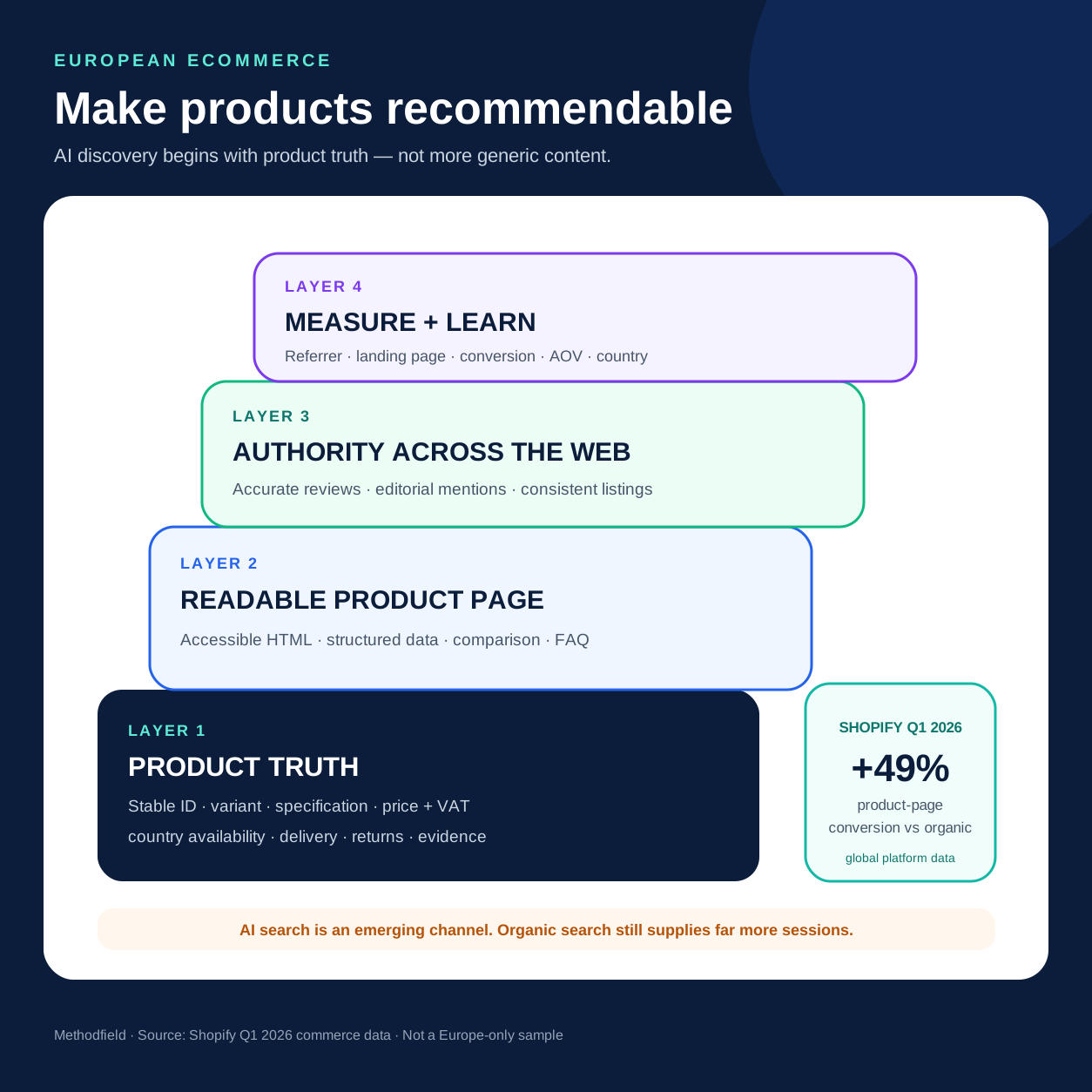
Layer 1: Product truth
Create a single authoritative record for each product and variant. Resolve duplicate SKUs, stale prices and conflicting specifications before generating more content.
Layer 2: Readable product pages
Render core facts in accessible HTML. Use descriptive headings, comparison tables that work on mobile, clear language and appropriate structured data such as Product, Offer, AggregateRating and FAQ markup where the page genuinely contains that information.
Structured data should match what a person can see. Invisible or misleading markup is not a growth strategy.
Layer 3: Authority across the web
AI systems can consider signals beyond the merchant domain. Earn accurate reviews, editorial mentions, distributor listings, community discussion and specialist comparisons. Consistency matters: the same model should not have five contradictory specifications across the web.
Layer 4: Measurement and feedback
Track AI answer engines as a distinct acquisition group where possible:
- sessions and landing pages;
- product-page conversion;
- revenue per session;
- average order value;
- assisted conversions;
- country and language;
- product category;
- returns and support contacts;
- questions captured by onsite search or assistants.
High conversion on tiny volume may not justify a major project. Use both rate and absolute contribution.
A four-week implementation plan
Week 1: Establish the baseline
- identify AI referrers in analytics;
- list the product pages receiving them;
- compare conversion and order value with organic traffic;
- document tracking gaps;
- choose one category with meaningful margin and clean inventory data.
Week 2: Repair product truth
- remove duplicate or conflicting fields;
- fill high-value missing attributes;
- validate country availability, price, VAT, delivery and returns;
- connect variants correctly;
- assign an owner and update frequency.
Week 3: Improve page legibility
- put decisive facts near the top of the page;
- add a structured specification block;
- answer real pre-purchase questions;
- provide “best for” and “not ideal for” guidance;
- test server-rendered output without relying on visual inspection alone;
- validate structured data.
Week 4: Test discoverability
Create a stable set of representative questions in each priority market, for example:
- product plus budget;
- product plus country availability;
- two-model comparison;
- product plus use case;
- product plus a hard exclusion;
- replacement part or compatibility query.
Record whether the product appears, which claims are cited, whether information is current and which competitors are preferred. Do not automate large-scale querying in ways that violate platform terms.
Content that helps both people and machines
Good answer-engine content is not a mass of AI-generated category pages. It reduces uncertainty.
Useful formats include:
- decision guides with explicit criteria;
- side-by-side comparisons using stable data;
- compatibility and sizing explainers;
- country-specific delivery and returns pages;
- troubleshooting based on real support demand;
- transparent “who this is for” recommendations;
- expert articles with named authors and sources.
Avoid unsupported superlatives such as “best,” “sustainable” or “professional grade.” State the evidence and comparison dimension.
Prepare for agent-mediated transactions carefully
The next step beyond recommendation is action: an agent may query stock, choose a variant or complete a purchase. That requires more than discoverability.
Before enabling machine-mediated transactions, check:
- real-time inventory accuracy;
- identity and authorisation;
- price and promotion validity;
- address and country rules;
- payment boundaries;
- confirmation and cancellation;
- fraud controls;
- a durable order record;
- clear responsibility when the agent chooses incorrectly.
Start with reliable query access before delegating the transaction.
The practical goal
Do not optimise for being mentioned by every AI system. Optimise for being accurately recommendable when your product genuinely fits.
That means a complete product record, a readable page, consistent evidence and a measurement loop. Those foundations improve SEO, conversion, support and AI discovery at the same time.
References
- Shopify. “AI-referred shoppers convert better and spend more.” Q1 2026 commerce data. Platform analysis (opens in a new tab).
- Shopify. “Agentic Commerce: An Executive Guide to What's Happening and What to Do About It.” 2026. Executive guide (opens in a new tab).
Connect discovery to the business system
Use Customer Journey Mapping to see where AI compresses discovery and comparison, Jobs to Be Done to structure the criteria customers actually use, and OKRs to measure contribution without mistaking a fast-growing small channel for the whole acquisition system.