
Many small firms can automate a follow-up message. Far fewer can explain why that particular customer should receive it now. A purchase, installation, repair or subscription renewal creates potential moments of value. A service notice and a promotional message have different purposes and may follow different rules; neither should be sent merely because automation makes it easy. The design question is: what would help the customer complete the job they bought the product or service for?
Build a reason for each contact
Begin with a small event catalogue. A delivered product might justify setup guidance. A consumable may justify a replenishment reminder when ordinary usage suggests it is running low. A completed repair might justify a check that the problem stayed resolved. An upcoming contract end may justify a renewal review. Each event needs a customer benefit, an approved channel, an owner and a stop condition.
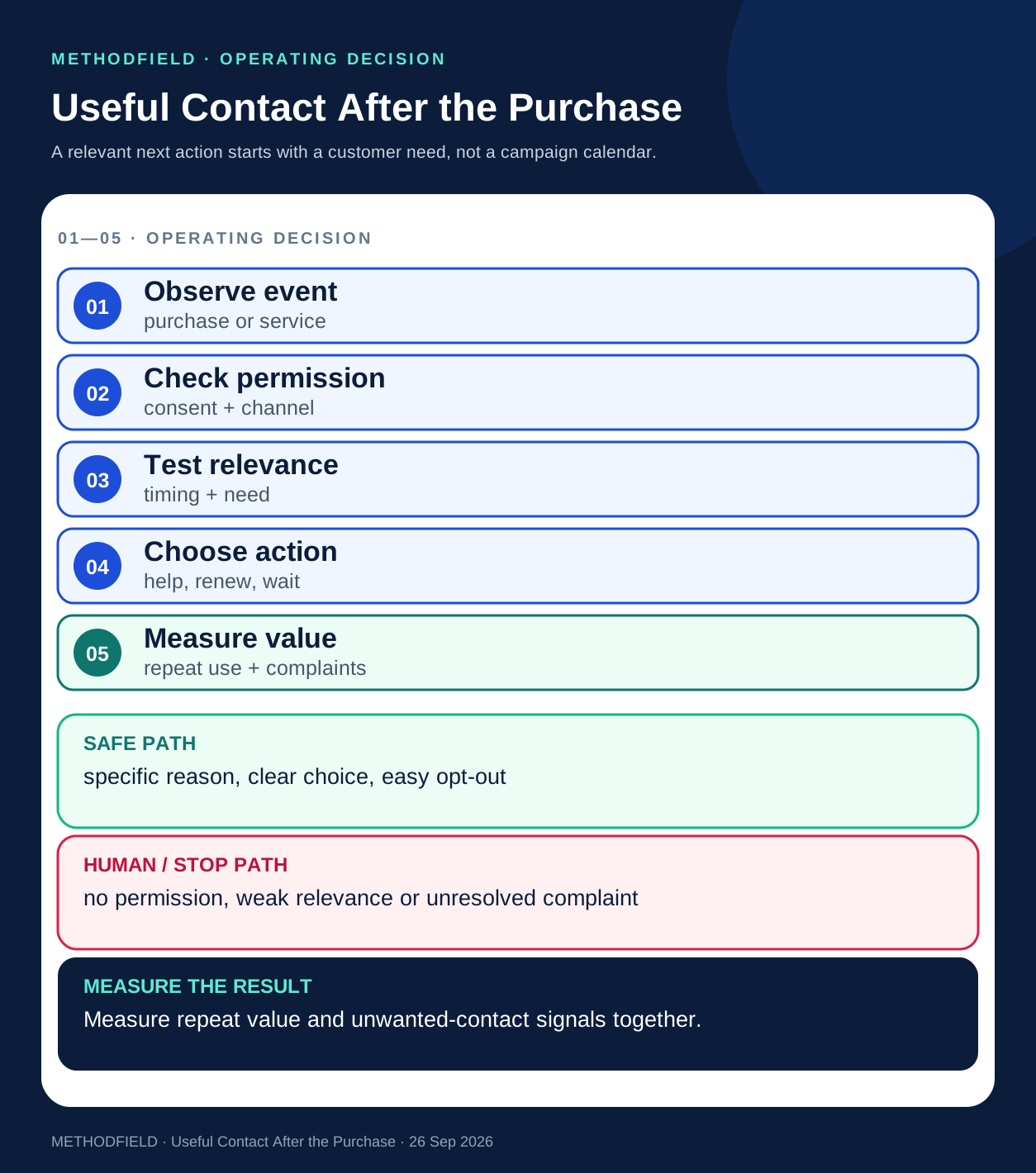
Do not ask AI to infer private preferences from a thin record. Use facts the business already has a reason to hold: purchase date, product, service plan and explicit customer choices. Classify the proposed contact as service or marketing, then check the applicable permission, suppression rule and channel preference before generating a message. An unresolved complaint should usually take precedence over an upsell.
Separate rules, language and judgment
Ordinary rules should decide whether an event occurred, whether a contact is permitted, and whether a suppression condition applies. AI can help choose from approved message types, summarise relevant service history or draft a contextual note. A person should review unusual, high-value or sensitive messages and any claim about a customer-specific benefit.
For example, a bicycle shop sold a service plan six months ago. A rules engine finds the scheduled inspection window. The system checks that the customer chose email and has no open complaint. AI drafts a concise note explaining the inspection and offering available times. If the service record shows an unresolved issue, it routes the case to a service adviser instead of sending a cheerful promotion. The example illustrates a workflow; it is not a measured business result.
Measure the relationship, not output volume
Useful measures include eligible customers contacted, response or booking rate, repeat purchases where attribution is plausible, unsubscribes, complaints, corrections and service minutes. Compare similar customer groups over a defined period. If volume is low, read the actual replies: they often reveal whether the contact was timely and helpful more clearly than an unstable percentage.
A simple decision log should record the event, data used, permission state, proposed message, approver, send result and subsequent outcome. This makes it possible to identify a bad rule, a poor AI draft or an inappropriate trigger without treating every customer silence as a failure.
The first experiment
Choose one event with a clear service benefit. Write three approved message variants and one suppression rule. Run a small review-only trial using recent, sanitised records; count how often staff accept, edit or reject the proposal. Then send through the normal customer system to a limited eligible group. Stop or revise if customers question why they were contacted, the underlying data is stale, or the review burden exceeds the value of the action.
Methodfield's sales workflow explains controlled follow-up after a conversation. The present workflow starts after a completed purchase or service and tests whether a new contact is useful at all. The workflow-priority guide helps decide whether this event deserves automation.
Working artifact: the contact decision card
Write this card before adding a new post-purchase trigger. It makes the proposed customer benefit and the reason for sending visible to a reviewer.
| Field | Decision to record |
|---|---|
| Event | What happened, when, and in which system it was verified |
| Purpose | Service help, renewal or marketing; the benefit for this customer |
| Permission | Applicable basis, permitted channel and current opt-out state |
| Suppression | Complaint, recent contact, stale record or unsuitable timing |
| Outcome | Sent, withheld or routed to service; later response and complaint signal |
Review withheld contacts as well as sent ones. A high acceptance rate may mean the rule is too broad if customers are surprised by the message. When the purpose changes from service help to promotion, reassess the permission and text instead of reusing the old trigger.
Sources and scope
- Methodfield: Build the Workflow Before the Agent.
- Methodfield: Prioritise the Workflow Before You Choose the AI.
Review marketing permissions and customer-data use for the target market and channel before applying this pattern.