
A signed contract is the start of delivery, not proof that the customer can use the service. Sales may know the promised scope while the delivery team lacks access, documents or a named counterpart. The customer sees one organisation and notices the repeated questions. The useful automation turns the agreement into a complete handoff and verified first outcome.
Define the first value
Choose an observable customer result: an account activated, a first appointment completed, a working integration accepted or a service plan confirmed. “Onboarding email sent” is a step, not the result. Work backwards from that outcome to the data, approvals, access and owner needed to reach it.
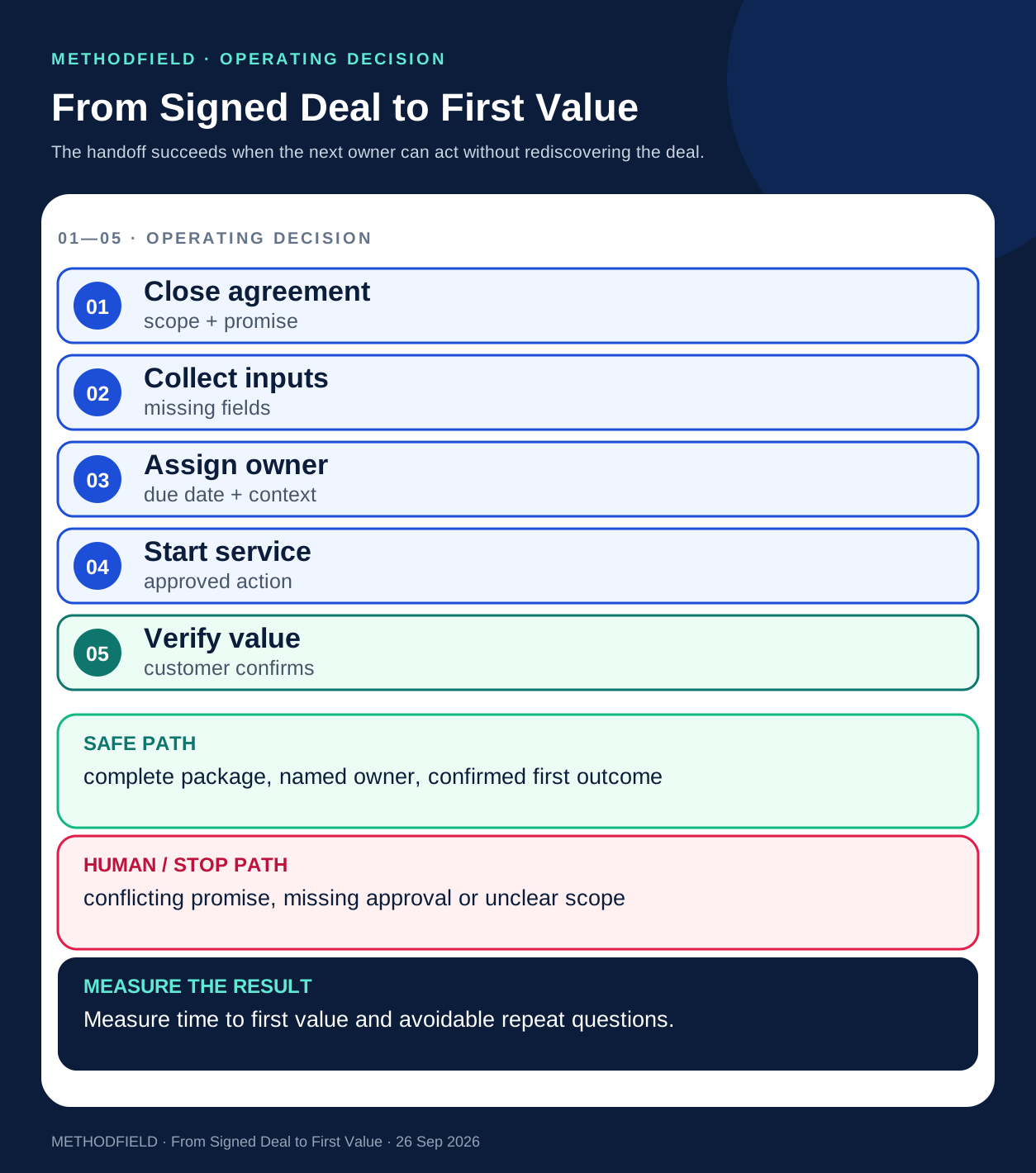
The handoff package should include customer and contract IDs, agreed scope, exclusions, important promises, implementation contacts, deadlines, required documents, open questions and the first-value criterion. Every field needs a source. If the signed document conflicts with a sales note, the system should surface the conflict to an authorised person rather than quietly choosing one version.
Use AI where the input is messy
AI can draft a handoff summary, extract milestones from documents and suggest missing questions. Deterministic rules should verify required fields, permissions, duplicate accounts and valid state transitions. An employee checks customer commitments and approves any change to scope or delivery date. The service system records assignments and completion using returned IDs; a model's claim that work is complete is not evidence.
Consider a small B2B software provider. Sales closes a deal that includes two integrations. The AI draft lists both, but only one has approved access and a named customer owner. The launch process marks the package incomplete, creates a question for the account manager and does not mark the handoff ready. Once access is approved, operations owns the next step and the customer receives a clear schedule. This is an illustrative operating pattern, not a client case.
Make the handoff visible
Use a small state model: signed, intake incomplete, ready for delivery, work started, first value verified. Record why an item waits and who can unblock it. A weekly queue review should distinguish missing customer input from internal delay. If every customer needs the same clarification, fix the sales form or contract template instead of asking AI to write a nicer request each time.
Measure time from signature to first value, repeated questions, cases missing an owner, scope corrections, customer effort and reopened onboarding work. Compare the whole path, not only the time spent drafting a welcome message.
A bounded pilot
Review a recent sample of completed and delayed onboardings. Build the handoff field list from the defects that actually caused delay. Run AI extraction without changing production records and compare it with a sales and operations reviewer. Enable automatic task creation only for verified fields. Keep contractual interpretation, missing approvals and promises to the customer under human authority.
Methodfield's post-call sales workflow ends with a controlled next action. The Service Blueprint makes backstage work visible. This article joins them at the point where a commercial promise becomes a delivered service.
Working artifact: handoff acceptance
The delivery owner should accept or return a specific package, not inherit an undefined queue. Use the same acceptance fields for every account.
| Field | Acceptance evidence |
|---|---|
| Promise | Signed scope, exclusions and any approved exception |
| Access | Required systems, customer contacts and permissions available |
| Ownership | Delivery owner, customer counterpart and next due date named |
| First value | Observable result and who will confirm it |
| Open issue | Conflict, missing item, responsible person and resolution date |
Acceptance is a recorded state change. A welcome email or AI-generated summary cannot substitute for it. If delivery returns the package, sales remains the owner of the missing commitment until the issue is resolved or explicitly reassigned.
Sources and scope
The B2B provider example is illustrative and does not report a Methodfield client outcome.